⚖️ From SEO to AEO: Why Law Firms Must Rethink Digital Visibility in the Age of AI

For years, law firms have invested heavily in SEO (Search Engine Optimisation) — building keyword-rich websites, publishing blogs, and chasing Google rankings.

But the landscape is changing. Fast.

With the rise of AI-powered “answer engines” like ChatGPT, Perplexity, and even Google’s Search Generative Experience, people are no longer just searching for links. They are asking questions — and expecting direct, authoritative answers.

This is where AEO (Ask Engine Optimisation) comes in.


1. What is AEO?

Ask Engine Optimisation is the process of making sure your firm’s expertise shows up when clients ask AI tools (not just search engines) for legal answers.

Instead of optimising for keywords like “best family lawyer in Manchester”, AEO focuses on structured, credible, machine-readable knowledge that AI systems can pull from when generating answers.

In short:

  • SEO = ranking in Google
  • AEO = being the answer in AI-driven platforms

2. Why SEO is Dying (for Law Firms)

SEO isn’t going to vanish overnight — but it’s no longer enough on its own.

Why?

  • AI answer engines bypass links. They summarise, they don’t send traffic.
  • Voice and chat are rising. Clients are asking Alexa, Siri, or ChatGPT legal questions directly.
  • Trust matters more. AI models weigh authority, citations, and structured data, not just backlinks and keywords.

If your firm relies only on SEO, you risk becoming invisible in the spaces where clients increasingly look for answers.


3. How Law Firms Can Practically Apply AEO

Here’s what forward-thinking firms should start doing today:

🔹 Structured Data & Schema Markup Make your content machine-readable so AI engines can easily verify and pull from it.

🔹 Authoritative Content, Not Clickbait AI tools look for substance: detailed legal guides, FAQs, case studies, jurisdiction-specific explanations.

🔹 Q&A Format Think like your clients: “How do I file for divorce in England?” / “What are the steps for I-130 in Kansas?” Format content around real questions clients ask.

🔹 Consistency Across Platforms Ensure your lawyers’ bios, case focus, and jurisdictional expertise are consistent across directories, LinkedIn, and your firm’s site.

🔹 Reputation & Citations AI tools increasingly weigh external credibility. Publish in legal journals, contribute to bar associations, and get cited online.


4. The Competitive Advantage for Early Movers

Most firms are still chasing traditional SEO. But the ones who pivot now to AEO will: ✅ Appear in AI-generated answers before competitors ✅ Build stronger digital authority ✅ Future-proof their marketing spend


⚖️ Final Thought

For law firms, the shift from SEO to AEO is not optional. It’s the difference between being a link on page three and being the answer a potential client actually sees.

Lawyers don’t just need visibility. They need trust, clarity, and authority in the places clients are now asking questions.

The future isn’t search-first. It’s ask-first.

#AEO #LegalMarketing #LegalTech #FutureOfLaw #LawFirmGrowth #AIinLaw

🧠 Conscious AI or Conscious Illusion? Why the Debate Matters More Than Ever

The latest headlines warn us of “seemingly conscious AI.” Mustafa Suleyman, CEO of Microsoft AI, described the emergence of AI that appears conscious as “inevitable and unwelcome.” His concern is clear: while AI is becoming more powerful, we risk encouraging the illusion that these tools are thinking entities.

And he’s right to raise the alarm.

But here’s the deeper issue: the danger lies not in AI suddenly “waking up,” but in how humans perceive and interact with these systems.


1. The Illusion of Consciousness

Modern AI models are extraordinary mimics. They generate text, speech, even emotional tones that feel real. Yet this is simulation, not sentience. The risk is that users—especially vulnerable ones—blur that line, attributing feelings, intent, or consciousness where none exists.

This isn’t a technical problem alone; it’s a legal, ethical, and societal problem.


2. The Rise of “AI Psychosis”

The article references “AI psychosis” — a non-clinical but important concept describing cases where individuals form unhealthy dependencies on chatbots.

From a legal-tech perspective, this raises serious questions:

  • Should regulators treat AI systems as potential risks to mental health?
  • What liability might fall on companies if users suffer harm from over-reliance?
  • How do we balance innovation with protection?

Much like tobacco or gambling, overuse isn’t just a matter of choice—it’s a matter of design. When AI is engineered to be hyper-responsive, empathetic, and available 24/7, human attachment is almost inevitable.


3. Building AI “For People”

Suleyman argues: “We must build AI for people; not to be a digital person.”

I agree—but I would push further.

Building AI “for people” means embedding safeguards into law, design, and professional standards:

  • Transparency: Clear communication that AI is not conscious.
  • Guardrails: Defaults that reduce over-dependence (e.g., session limits, wellness checks).
  • Legal frameworks: Accountability for firms that encourage anthropomorphisation as a selling point.

In legal practice, for example, AI should be a colleague to the lawyer, not a substitute for the lawyer. A drafting assistant, not a “thinking partner.”


4. Where We Go From Here

The arrival of “seemingly conscious AI” is less about AI’s internal state and more about our collective responsibility.

We must resist the temptation to market tools as “alive.” We must educate users to engage critically. And we must recognize that, in law, technology is only as safe as the frameworks we build around it.

Because the real danger isn’t a machine that thinks. It’s a society that forgets the difference.


✅ Key Takeaway

AI is powerful. It can assist, accelerate, and even empathize in convincing ways. But it cannot feel, suffer, or decide. If we blur that distinction, we risk not only confusion—but real harm to trust, mental health, and the rule of law.

#AIRegulation #LegalTech #AIethics #ConsciousAI #FutureOfLaw #AITechResponsibility

AI Sandboxes: Europe’s Quiet Revolution in Responsible Innovation

Everyone in tech and law is talking about the EU AI Act. Most of the conversation has been about risk classifications, frontier models, and the looming weight of compliance.

But almost no one is talking about the Act’s most practical tool: the regulatory sandbox.

Too often dismissed as a bureaucratic hoop, the sandbox is in fact one of the most powerful mechanisms Europe has built for bridging the gap between innovation and governance. If we get this right, sandboxes won’t slow AI down — they’ll accelerate adoption, trust, and market confidence.


The Blind Spot in AI Governance

Right now, companies are caught between two extremes:

  • On one side, policymakers and researchers focus on existential AI risks and high-risk system classifications.
  • On the other, businesses are rushing to integrate APIs and third-party AI tools without fully grasping the legal or technical implications.

The missing middle? A place where innovators and regulators can safely test, learn, and clarify.

That’s what sandboxes are designed to provide: a proving ground, not a paperwork exercise.


What the Sandbox Really Is

It’s tempting to think of a sandbox as just a technical testing environment. But the EU AI Act reimagines it as something more powerful: a structured dialogue between innovators, regulators, and civil society.

In practice, that means:

  • Trialling AI systems under supervision before they hit the market.
  • Working directly with National Competent Authorities (NCAs) to understand compliance expectations.
  • Involving independent experts and civil society to challenge assumptions and keep the public interest in focus.

Instead of asking forgiveness later, businesses get a controlled space to ask permission — and clarity — before scaling.


Why Legal Teams Should Care

For legal professionals, the sandbox is not a “nice to have.” It’s a strategic tool.

⚖️ Liability clarity: Who’s responsible when AI gets it wrong? The sandbox is where those frameworks can be tested and documented.

⚖️ IP and data usage: Many AI tools come with murky licensing or “data for improvement” clauses. Sandboxes allow these issues to be stress-tested before contracts are signed at scale.

⚖️ Data protection compliance: GDPR, CCPA, and future global frameworks impose strict obligations. Sandboxes let companies trial real-world data flows in a legally controlled space.

⚖️ Governance evidence: If litigation or regulatory challenge comes later, documented sandbox participation can show that a business acted responsibly and proactively.


The Business Advantage

This isn’t just about compliance. Companies that treat sandboxes seriously will gain real commercial benefits:

Trust with regulators → smoother approvals and fewer costly surprises. ✅ Trust with customers → proof that products were tested for fairness, safety, and transparency. ✅ Trust with investors → reduced legal and reputational risk makes innovation more fundable.

In a crowded market, compliance is not a cost. It’s a competitive differentiator.


The Bigger Picture

Sandboxes are not meant to operate in isolation. The EU AI Act envisions them as part of a wider ecosystem, where lessons from one sandbox can feed into others, creating shared playbooks for responsible innovation.

At the same time, national flexibility ensures that sandboxes can adapt to specific market contexts. That balance — harmonisation with local nuance — is how Europe can set the global standard for AI governance.


Closing Thought

The EU AI Act’s sandbox is not red tape. It’s a roadmap.

For innovators, it’s the space to experiment without fear. For legal teams, it’s a shield against uncertainty. For regulators, it’s a mechanism for building trust.

And for Europe, it’s a chance to prove that responsible AI can also be competitive AI.

The challenge now is simple: will businesses treat sandboxes as a compliance checkbox, or as the proving ground where the next generation of AI trust is built?

Who Really Wins the AI Policy Race? This Legal-Technologist’s Perspective

Executive Summary

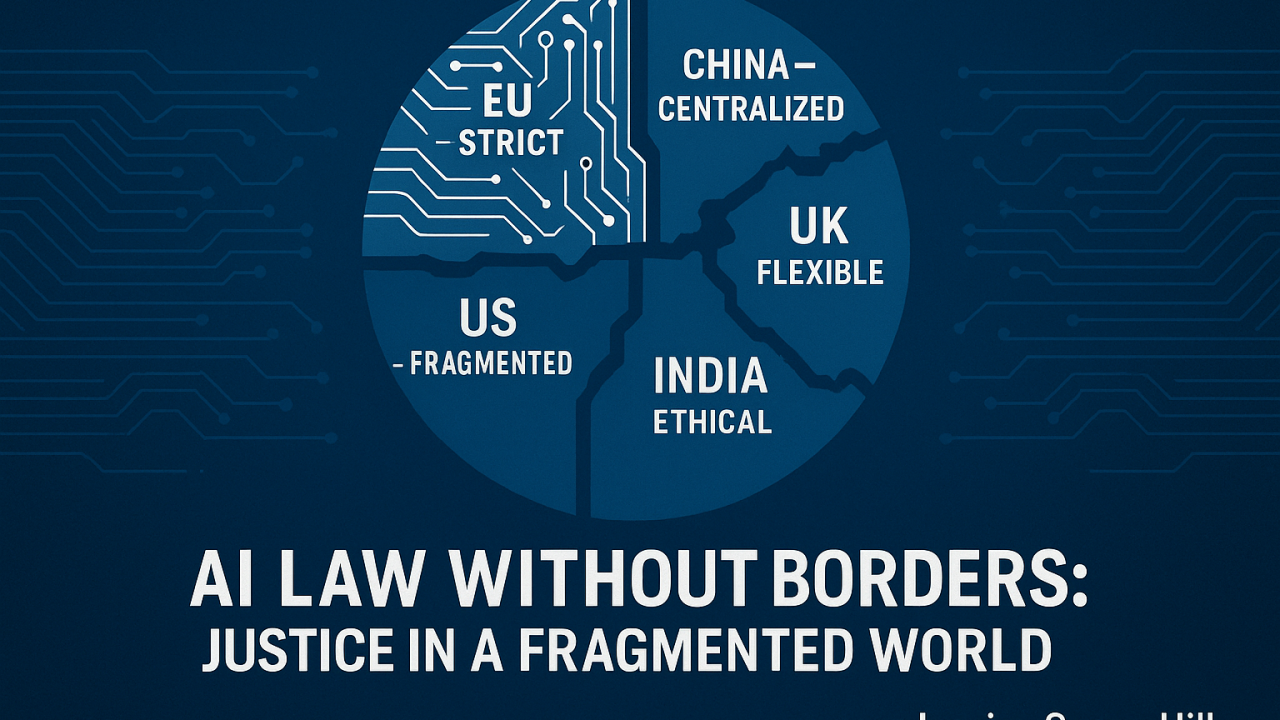
The global conversation about artificial intelligence (AI) regulation often gets framed as a “race” between regions. The EU, US, China, UK, and emerging economies are each drafting rulebooks. Analysts, like Reiner Petzold, describe this moment as a fragmented global competition where every government is running but no one is playing the same sport.

Yet from a legal-tech perspective, the framing of AI policy as a “race” is both incomplete and misleading. It is not only about speed of innovation versus caution of regulation. It is about law, justice, rights, and enforceability. Policies are only as strong as the courts that uphold them, and businesses cannot treat compliance as an optional box-tick.

This article expands the debate: not just who is “winning” AI policy on paper, but whether the world’s legal systems are equipped to govern AI in practice.


I. The Global AI Policy Landscape: A Patchwork Without a Passport

The recent Global State of AI Policies report maps how 36+ countries and regions approach AI. Some key highlights:

  • European Union (EU): The most detailed framework, the EU AI Act, is risk-based and enforces strict requirements around fundamental rights. Penalties are high, enforcement is serious.
  • United States (US): No single law; instead, a sector-by-sector approach. Healthcare and finance have rules, but elsewhere the patchwork leaves legal uncertainty. The focus is on innovation, not restriction.
  • China: Centralized, security-first, and deeply interventionist. Regulations focus on social stability and surveillance while simultaneously pushing for global AI dominance.
  • United Kingdom (UK): A flexible, principles-led, “regulate as you go” approach designed to balance innovation and adaptability.
  • India: A phased, ethics-driven approach, seeking balance between economic opportunity and responsible AI.
  • Others: From Singapore’s trust-based frameworks to Brazil’s EU-inspired risk-based proposals, and Africa’s emerging sandboxes, the variety is enormous.

The common theme: fragmentation. There is no “AI passport.” Companies face a compliance maze where exporting an AI product globally means redesigning for multiple, sometimes contradictory standards.


II. Why Fragmentation is More Than a Policy Problem

Reiner correctly noted that fragmentation is the defining feature of AI governance today. But as a future barrister and AI law strategist, I argue this is not just a regulatory inconvenience — it is a legal time bomb.

  1. Cross-border disputes are inevitable. Imagine an AI system built in California, deployed in Berlin, challenged in Delhi, and litigated in London. Whose law applies? Which court has jurisdiction? The EU AI Act? The US patchwork? India’s phased guidelines?
  2. Fragmentation undermines trust. If citizens cannot rely on a predictable legal standard, public confidence erodes. Law, unlike technology, depends on consistency. Justice cannot be relative to geography in a hyperconnected world.
  3. Fragmentation incentivizes regulatory arbitrage. Companies may choose to operate where oversight is weakest, much like tax havens. This undermines stronger jurisdictions and risks creating “AI havens” where accountability is absent.

III. The Legal Tensions Beneath the Policies

Behind the high-level policy statements are fundamental legal clashes:

1. Data Protection vs. National Security

  • EU: GDPR + AI Act → strict consent and data handling rules.
  • China: National security trumps individual rights. Data is a state asset.
  • US: Privacy rules are fragmented; HIPAA (health), GLBA (finance), but no universal baseline.

This creates contradictions: an AI system lawful in Beijing could be unlawful in Brussels.

2. Transparency vs. Trade Secrets

  • Regulators demand explainability.
  • But AI developers argue explainability exposes intellectual property and competitive advantage.
  • Courts will soon have to weigh “right to explanation” against “right to protect IP.”

3. Risk-Based Categorisation vs. Reality of Enforcement

  • Risk levels (EU, Brazil, South Korea) sound logical.
  • But enforcement requires resources, trained regulators, and local courts willing to test cases.
  • Laws without teeth create false security.

4. Contract Law Meets AI

When an AI tool signs or interprets contracts, what legal weight does that carry? Contract law was never designed for machine agency. Courts will have to reinterpret doctrines like offer, acceptance, and intention in light of AI mediation. Particularly exciting to me.


IV. Courts and Compliance: The Real Stress Test

The effectiveness of AI regulation will be tested not in policy documents but in courtrooms.

Case Scenario 1: Discrimination in Hiring

  • AI screening tools flag certain candidates as “low suitability.”
  • In the EU: candidate may challenge under anti-discrimination + AI Act provisions.
  • In the US: possible EEOC claim, but standards vary by state.
  • In China: challenge unlikely, as state interest may override individual claims.

Case Scenario 2: AI in Healthcare

  • An AI-enabled device is approved by FDA in the US but denied by regulators in the EU.
  • Patient harmed in London: could sue manufacturer under EU law even though the device was compliant in the US.

Case Scenario 3: Cross-Border AI Contract

  • AI negotiates a contract between a German and US firm. Dispute arises.
  • Which jurisdiction’s definition of “valid consent” applies? EU strictness or US flexibility?

Each scenario shows one truth: AI law will live or die in the courts, not in white papers.


V. Business and Justice Implications

For businesses:

  • Compliance ≠ checklists. It requires anticipating litigation.
  • Local readiness matters. Laws may be global in intent but local in enforcement.
  • Strictest law sets the baseline. Many companies will design for EU compliance first, then scale.

For justice systems:

  • Access to justice gap widens. Citizens in strong-regulation countries (EU) can litigate AI harms; citizens in weaker-regulation countries cannot. This risks creating two classes of AI users: protected and unprotected.
  • Legal inequality will become a geopolitical issue.

For law firms and legal departments:

  • AI regulation is not an abstract policy space — it is the next big litigation wave. Think asbestos, tobacco, GDPR fines. AI will be bigger.

VI. Towards a Global Legal Framework?

Can the world agree on a unified AI legal framework?

  • Possibility 1: Treaties. Bodies like the UN or OECD could push for shared principles, like the Paris Agreement for AI. But enforcement is weak.
  • Possibility 2: De facto convergence. Companies may follow the strictest regime (EU AI Act), creating global standards by default.
  • Possibility 3: Regional blocs. US, EU, China, India each create spheres of legal influence, leaving companies to “pick a bloc.”

The most realistic? De facto convergence. As with GDPR, global firms may treat EU law as the gold standard because it is easier to comply universally than build fragmented compliance systems.

But convergence must not stop at risk categories and transparency checklists. It must embed fundamental rights, access to justice, and due process. Otherwise, AI will deepen inequalities.


VII. Conclusion: From Race to Rule of Law

Reiner asked: Who’s winning the AI policy race? My answer: no one wins a race where the finish line keeps moving.

Instead, the real question is: Will law, rights, and justice keep pace with AI?

The global AI landscape is not just fragmented — it is testing whether our legal systems are strong enough to protect citizens, hold companies accountable, and sustain public trust.

Leaders who succeed will not just build compliant products; they will anticipate litigation, embed rights from the design stage, and navigate courts as confidently as code.

For me, as an aspiring barrister and AI strategist, this is not only a professional challenge — it is a generational responsibility. The law must remain the anchor in a world racing to define the future of intelligence.

#AI #LegalTech #AIRegulation #FutureOfLaw #AccessToJustice #GlobalAI

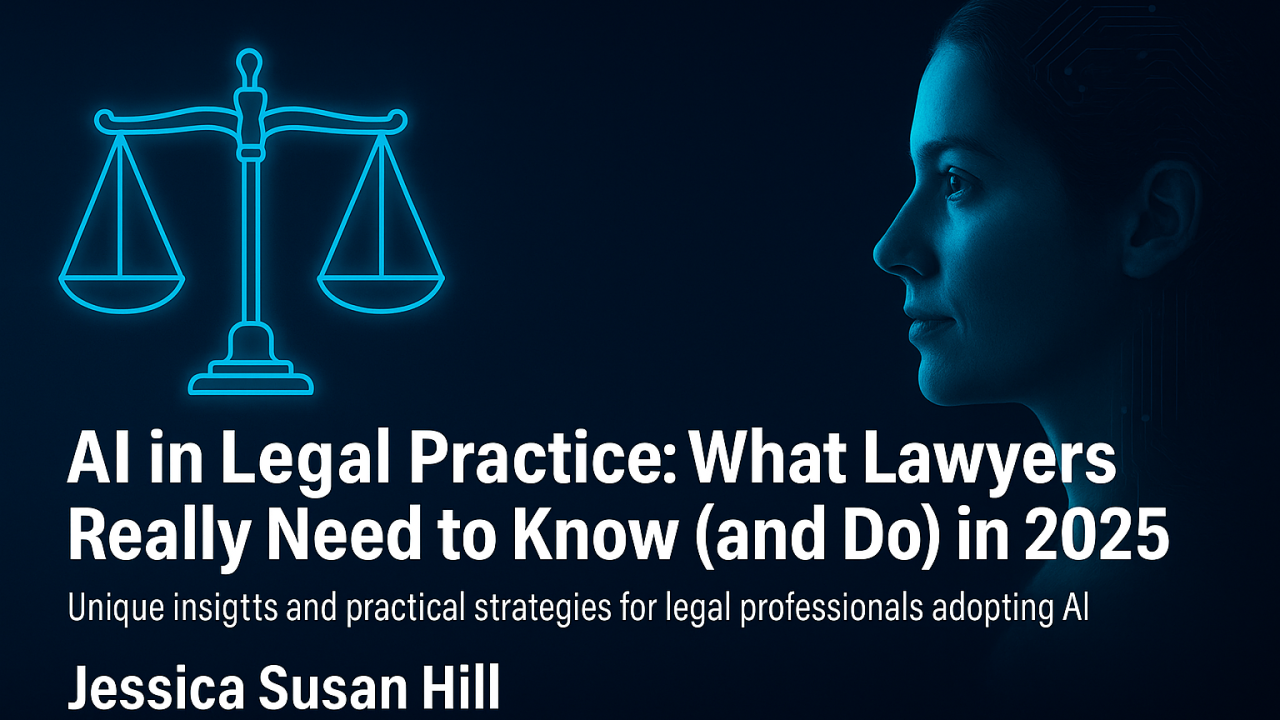
AI in Legal Practice: What Lawyers Really Need to Know (and Do) in 2025

Why This Matters Now

Artificial intelligence is no longer a futuristic tool on the edges of legal practice — it’s here, shaping workflows, economics, and ethics across the profession. As the American Bar Association and most U.S. jurisdictions update their competence rules to explicitly include “awareness of technology,” lawyers cannot afford to treat AI as optional.

But beyond the hype, what does AI adoption actually mean for practicing lawyers today? And how do we use it without falling into the traps that have already led to public sanctions, malpractice risks, and client mistrust?


1. AI Is Reallocating Work, Not Replacing Lawyers

📌 Unique Insight: Too often, discussions about AI fixate on “replacement.” In reality, the more significant shift is reallocation. Routine tasks (document review, contract analysis, e-discovery) are shrinking, while capacity for high-value advisory and strategy work is expanding. ➡ For law firms, this means profitability can rise even if headcount stays the same. The lawyers who thrive will be those who shift their focus towards judgment, negotiation, and client strategy.


2. Confidentiality Is the First Red Flag

The FAQ rightly warns about public AI tools like ChatGPT. Uploading client data into open models risks breaching Model Rule 1.6, client contracts, and even attorney-client privilege. 📌 Unique Insight: Think of AI platforms as “outsourced junior staff.” Would you hand your client’s file to a random stranger on the internet? If not, treat public AI the same way. ➡ Firms must demand end-to-end encryption, role-based access controls, and audit trails from vendors — otherwise, the efficiency gains aren’t worth the malpractice exposure.


3. The Hallucination Problem Isn’t Going Away

AI hallucinations — false cases, misquoted authorities, fabricated precedent — are not just a nuisance. They’ve already cost lawyers thousands in sanctions (e.g., Mata v. Avianca). 📌 Unique Insight: The real risk isn’t that AI makes things up — it’s that it makes things up confidently. That overconfidence mirrors how clients sometimes trust a lawyer’s word implicitly. ➡ Treat AI as an assistant with a bluffing problem: verify every citation, cross-reference multiple sources, and never submit AI-generated content unreviewed.


4. Ethics Rules Already Apply to AI

  • Competence (Rule 1.1): You must understand both the benefits and the risks of AI tools.
  • Confidentiality (Rule 1.6): Protect client data in AI systems.
  • Supervision (Rule 5.3): Treat AI as “nonlawyer assistance.”
  • Candor (Rule 3.3): Verify every AI-generated authority before filing.

📌 Unique Insight: Ignorance of AI’s limits is not a defense. Courts have made clear: if you didn’t read the case yourself, you can’t claim “the AI told me so.”


5. Client Disclosure Builds Trust

You don’t always need to disclose AI use, but best practice is transparency when:

  • AI materially affects case strategy
  • Data will be processed externally
  • Billing will change due to AI efficiencies

📌 Unique Insight: Clients don’t mind AI — they mind surprises. By disclosing upfront, you turn AI into a value proposition (“we can work faster and at lower cost”) rather than a hidden liability.


6. Firm Policies and Training Are Non-Negotiable

The FAQ calls for firm-wide AI policies, training, and audits. Without these, adoption becomes chaotic and risks escalate. 📌 Unique Insight: Training shouldn’t just be technical. Lawyers also need to learn error recognition — spotting when an AI output “smells wrong.” That critical thinking skill is what separates professional judgment from overreliance.


7. Looking Ahead: Mandatory AI?

The ABA suggests that in some contexts, using AI may soon be required for competent representation. 📌 Unique Insight: This is a turning point. AI may shift from an optional “advantage” to an ethical duty of competence — particularly in discovery-heavy litigation, where not using AI could be seen as inefficient or even negligent.


Balancing Innovation with Judgment

AI will not replace the lawyer — but it will reshape the practice of law. The firms and professionals who succeed in this new era will be those who:

  • Embrace AI early for routine work
  • Protect client data fiercely
  • Verify outputs without exception
  • Train themselves and their teams continuously
  • Communicate openly with clients

Ultimately, the future of legal AI is not about machines outthinking humans. It’s about humans using machines wisely — and ensuring our judgment, ethics, and advocacy remain at the core of legal practice.


👉 How is your firm approaching AI adoption?

Do you see it as a risk, an opportunity, or both? I’d love to hear how others are building policies, training, and safeguards around this fast-moving area!

#BarristerInBeta #AIandAdvocacy #FutureBarristerVibes #FromCourtroomToCode #GeekChicBarrister #LegalTechWithJess #JusticeAndJava ☕️ #HumanInTheLoopLawyer #MumInTechLaw #CrossBorderCounsel #CircuitBoardsAndCourtrooms #AIForAccessToJustice #MentorshipMattersInLaw #SignalNotNoise

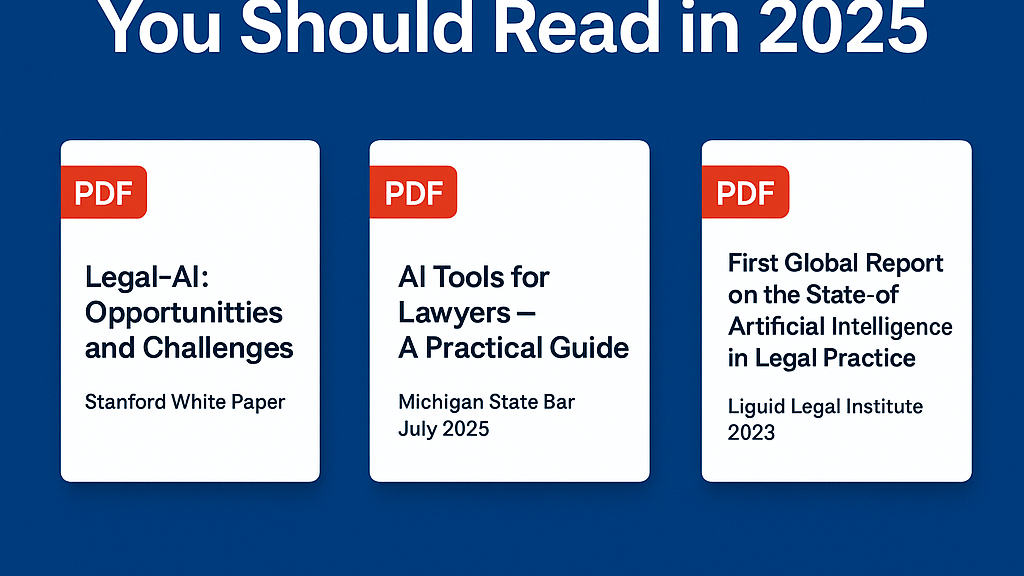
The 3 Most Important AI & LawTech PDFs You Should Read in 2025…So Far

…The legal industry is at a tipping point. Artificial Intelligence (AI) is no longer just a buzzword—it’s reshaping how lawyers research, draft, advise, and deliver services. But with so much noise in the market, which resources actually matter?

I’ve shortlisted three of the most important PDFs published online that every legal professional, innovator, or policymaker should read this year. Each brings a unique perspective—strategic, practical, and data-driven.


1️⃣ Legal-AI: Opportunities and Challenges (Stanford White Paper)

This paper from Stanford offers a visionary yet grounded roadmap for the role of AI in law. It highlights both opportunities (computational frameworks, patent analytics, legal personas) and the challenges—like cultural resistance, billable hour economics, and access to proprietary data.

🔑 Why it matters: It’s the most thoughtful balance I’ve seen between hype and reality, helping us understand both the promise and pitfalls of AI in legal practice.


2️⃣ AI Tools for Lawyers – A Practical Guide (Michigan State Bar, July 2025)

This brand-new guide (July 2025) is a practical playbook for lawyers looking to actually use AI in their daily work. It covers:

  • Legal research and drafting
  • Contract analysis
  • Litigation prediction
  • Client intake
  • Billing automation

🔑 Why it matters: It moves beyond theory—showing exactly how firms of all sizes can implement AI now, not five years from now.


3️⃣ First Global Report on the State of AI in Legal Practice (Liquid Legal Institute, 2023)

This empirical report surveyed over 200 law firms worldwide (representing nearly 100,000 legal professionals). It reveals:

  • Where AI is already being used
  • Regional adoption differences
  • How lawyers perceive risks vs. opportunities
  • Barriers to scaling (skills, culture, regulation)

🔑 Why it matters: This is the benchmark data we need—evidence of what firms are actually doing with AI, not just what they say they plan to do.


📌 Why These Three PDFs Stand Out

  • Stanford White Paper → Strategic Vision
  • Michigan State Bar Guide → Practical Implementation
  • LLI Global Report → Data & Evidence

Together, they form the perfect knowledge stack: strategy + practice + reality check.


🚀 My Takeaway

For lawyers and firms in 2025, the AI question isn’t “if”—it’s “how responsibly and effectively?”

  • Start with the Stanford White Paper to understand where AI is headed.
  • Use the MS Bar Guide to pilot AI tools in your workflows.
  • Benchmark your progress against the LLI Global Report to stay competitive.

The firms that combine these three perspectives—vision, action, and data—will lead the next decade of legal practice.


👉 Which of these do you think is most urgent for lawyers to read today—the strategy, the guide, or the data?

Guardrails and Gas Pedals: What the EU and US Can Teach Each Other About AI Benchmarking, Governance, and the Race for Trust

1. Introduction – Why AI Benchmarking Matters Now

If you work in AI governance, you’ll know that benchmarking rarely makes headlines. It doesn’t generate the hype of a new model release, the political theatre of a major regulatory announcement, or the drama of a high-profile AI failure.

But here’s the thing: benchmarks quietly shape the entire AI ecosystem. They decide what “good” looks like. They drive corporate R&D priorities. They influence investor confidence. And increasingly, they determine whether AI systems can be trusted in law, healthcare, finance, defence, and public administration.

When benchmarks are well-designed, they accelerate safe and beneficial AI adoption. When they’re flawed, they can encourage systems that perform brilliantly on paper but fail catastrophically in the real world.

We’re now entering a new chapter: agentic AI — systems that don’t just produce information, but act on the world. A chatbot that drafts a legal argument is one thing. An AI that autonomously files that argument with a court, negotiates with opposing counsel, or executes contractual obligations is another entirely.

In this context, the European Commission’s Joint Research Centre (JRC) has published a significant paper on the limitations and future of AI benchmarking. It’s a detailed critique — not just of the metrics, but of the underlying political, economic, and cultural forces that shape them.

Across the Atlantic, the U.S. government has laid out the America’s AI Action Plan — a document that positions AI leadership as a matter of national security and global economic dominance. Evaluations are part of the picture, but the emphasis is on speed, deregulation, and deployment.

Reading them side-by-side is fascinating. The EU paper says, in effect: “Slow down. Our benchmarks are fragile and need rethinking before agentic AI takes over.” The U.S. plan says: “We’re in a race. Build faster, deploy faster, and we’ll figure out the evaluations as we go.”

As someone working at the intersection of AI, law, and governance, I think both perspectives are right — and both are incomplete. We need the EU’s guardrails and the U.S.’s gas pedal, together.


2. The EU Commission’s View – Benchmarks as Political, Fragile, and in Need of Reform

The JRC paper is based on a meta-review of around 110 publications over the past decade, focusing on critical analyses of AI benchmarking.

Their main thesis? Benchmarks are not neutral scientific tools. They are “deeply political, performative, and generative” — meaning they don’t just measure AI systems, they shape what gets built in the first place.

2.1 Nine Categories of Benchmarking Problems

The paper identifies nine interlinked problem areas:

  1. Data Collection, Annotation, and Documentation – Poor documentation, reused datasets with unclear origins, and ethical concerns over privacy, consent, and bias. Benchmarks often rely on noisy, culturally biased, or ethically questionable data.
  2. Construct Validity – Many benchmarks don’t measure what they claim to measure. Terms like “fairness” or “safety” are poorly defined, and benchmarks become proxies for real-world capability without adequate justification.
  3. Sociocultural Context Gap – Benchmarks are normative instruments that embed certain values, often privileging efficiency over care, universality over context, and neutrality over positionality.
  4. Narrow Diversity and Scope – A heavy focus on text-based benchmarks, neglecting multimodal and real-world interactions. Safety and ethics benchmarks are underdeveloped.
  5. Economic and Competitive Roots – Benchmarks can serve as corporate marketing tools, fuelling hype and “SOTA-chasing” (state-of-the-art chasing) rather than genuine safety or capability improvements.
  6. Rigging and Gaming – Goodhart’s Law in action: when a measure becomes a target, it ceases to be a good measure. Benchmarks can be gamed through overfitting, data contamination, or sandbagging.
  7. Dubious Community Vetting – Certain benchmarks become dominant due to citation culture and inertia, not because they are truly fit for purpose.
  8. Benchmark Saturation – Rapid AI progress means many benchmarks are outdated almost as soon as they’re created.
  9. Complexity and Unknown Unknowns – AI systems can fail in ways benchmarks don’t anticipate. Safety fine-tuning can introduce new vulnerabilities.

2.2 The Agentic AI Challenge

The paper draws a key distinction:

  • Passive AI – Systems that generate text or images without acting on the world.
  • Agentic AI – Systems that act according to an objective function, affecting their environment directly.

This matters because agentic AI brings new risk dimensions:

  • Autonomy – What if an AI agent’s decisions harm a consumer in a transaction?
  • Principal–Agent Misalignment – What if the AI’s objective aligns more with the provider’s profit than the user’s interest?
  • Value Balancing – How do we weigh individual user benefit against societal welfare?

The JRC’s recommendation: import concepts from agency law into AI evaluation. Just as human agents have fiduciary duties to their principals, AI agents should be benchmarked on whether they act in their principal’s interest, respect authority, and avoid harm.


2.3 My Take as a Legaltech Professional

From a legal governance standpoint, this is a smart move. Agency law already has a rich set of doctrines for situations where one party acts on behalf of another but has discretion that could be abused. Bringing this into AI benchmarking could give us legally meaningful evaluation criteria — benchmarks that regulators and courts can interpret, not just engineers.


3. The US AI Action Plan – Evaluations in a Race for Dominance

The U.S. AI Action Plan, published in July 2025, is a very different kind of document. It’s not an academic review; it’s a strategic roadmap for achieving “unquestioned and unchallenged global technological dominance”.


3.1 Three Pillars

  1. Accelerate AI Innovation – Deregulation, support for open-source models, AI adoption in industry and government, AI-enabled science, and workforce development.
  2. Build American AI Infrastructure – Data centers, semiconductor manufacturing, energy grid expansion, secure compute for government, and critical infrastructure protection.
  3. Lead in International AI Diplomacy and Security – Export American AI to allies, counter Chinese influence in governance bodies, tighten export controls, and evaluate frontier models for national security risks.

3.2 Where Evaluations Fit In

Benchmarks and evaluations are not the star of this document, but they are there — framed in pragmatic, applied terms:

  • AI testbeds in secure, real-world settings for regulated industries like healthcare and agriculture.
  • Agency-specific evaluation guidelines through NIST for mission-specific AI uses.
  • Twice-yearly interagency meetings to share evaluation best practices.
  • National security evaluations of frontier models for risks like cyberattacks or biosecurity threats.

3.3 The Tone Shift

Where the EU paper is reflective and cautionary, the U.S. plan is forward-leaning and competitive. The emphasis is on speed — removing “onerous regulation” and “red tape” — while trusting that evaluation science can develop in parallel with deployment.


4. Comparative Analysis – Convergence and Divergence

4.1 Shared Ground

  • Both recognise the importance of trustworthy AI evaluations.
  • Both want AI to be safe, aligned, and beneficial in high-stakes contexts.
  • Both see evaluations as part of a larger governance framework.

4.2 EU’s Edge

  • Deep socio-technical analysis of benchmarking weaknesses.
  • Willingness to treat benchmarks as political artefacts that need democratic oversight.
  • Proposal to integrate legal concepts like agency law.

4.3 US’s Edge

  • Real-world testbeds that simulate deployment conditions.
  • Integration of evaluations into sector-specific regulatory and operational contexts.
  • Strong linkage between evaluation capacity and industrial/national security strategy.

4.4 Risks in Isolation

  • EU risk: Over-bureaucratisation, slowing innovation, making it harder for SMEs to compete.
  • US risk: Deploying systems faster than we can fully understand or trust them.

5. The Legal Dimension – Agency Law as a Bridge

Agency law governs the relationship between a principal (e.g., a client) and an agent (e.g., a lawyer) who is authorised to act on the principal’s behalf. Key duties include:

  • Duty of loyalty.
  • Duty to follow instructions.
  • Duty to act with care and competence.

Applying this to AI means asking:

  • Does the AI act in the principal’s interest, even if it conflicts with the provider’s profit motive?
  • Does it recognise and respect the principal’s authority?
  • Does it balance individual benefit with broader societal welfare when those interests conflict?

A transatlantic “agency benchmark” could be a powerful common ground — grounded in centuries of legal precedent, adaptable to different jurisdictions, and relevant across sectors.


6. Lessons for Legaltech and High-Stakes AI

For legaltech providers and buyers, these documents point to some practical evaluation criteria:

  • Don’t just ask for accuracy scores. Ask how the benchmark data was collected, documented, and validated.
  • Look for multi-modal, real-world test results, not just lab metrics.
  • Ask whether the system has been evaluated for principal–agent alignment.
  • Demand transparency on known failure modes, not just success rates.

7. Recommendations – Toward a Transatlantic Benchmarking Alliance

  • Joint EU–US working group on “trustworthy benchmarks” that reward performance without inviting gaming.
  • Common principles for benchmark trustworthiness: transparency, diversity, real-world relevance, and legal accountability.
  • Mutual recognition of benchmark results where standards align.

8. Conclusion

The EU is building the guardrails. The US is flooring the accelerator. If we only have one, we’re in trouble. If we can combine both, we have a chance to steer AI toward a future that is both innovative and safe.

#AI #ArtificialIntelligence #AIBenchmarking #AIRegulation #AITrust #AgenticAI #LegalTech #AIGovernance #EthicalAI #AIPolicy #EUAI #USAI #AIStandards #AITransparency #ResponsibleAI #AITesting #AIAlignment #AISafety #AIInnovation #TransatlanticAI


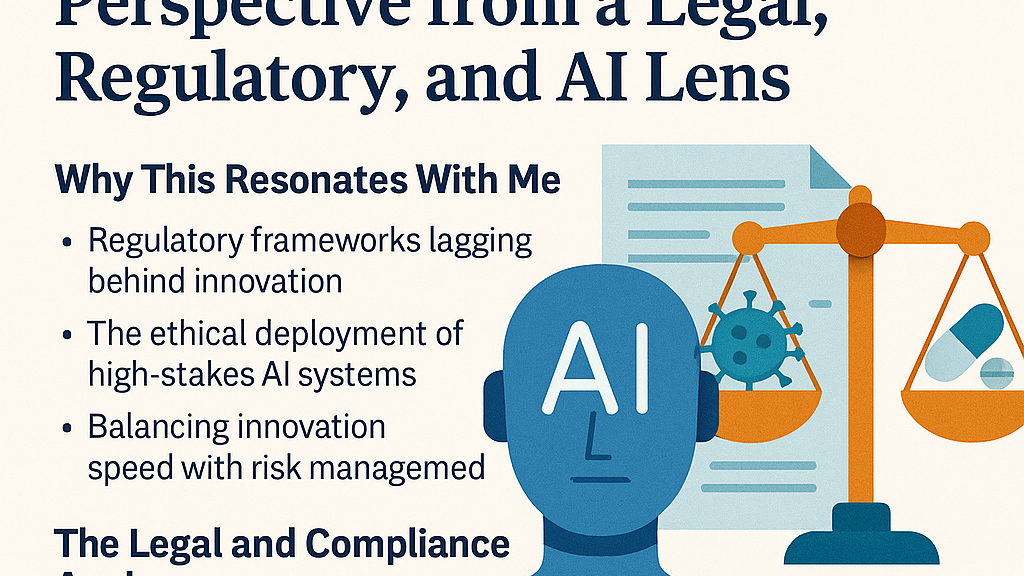
Could AI Save Us from the Antibiotic Apocalypse? My Perspective from a Legal, Regulatory, and AI Lens

The Sky News report by Thomas Moore highlights groundbreaking research from MIT, where generative AI is being used to design entirely new antibiotics against deadly superbugs like MRSA and drug-resistant gonorrhoea.

This isn’t just a medical milestone—it’s an AI milestone with far-reaching implications across law, regulation, and public health policy.

Why This Resonates With Me

My work sits at the intersection of AI, law, and access to justice—and while my focus is often on legaltech, the principles and challenges in medtech AI mirror those in my sector:

  • Regulatory frameworks lagging behind innovation
  • The ethical deployment of high-stakes AI systems
  • Balancing innovation speed with risk management

Antibiotic resistance is a global crisis, killing around five million people a year. The fact that the last major class of antibiotics was discovered in the 1980s underscores the urgency. AI’s ability to design molecules atom-by-atom and model their toxicity before they’re ever synthesised could dramatically accelerate the drug discovery pipeline—something traditional R&D has struggled to do efficiently.

The Legal and Compliance Angle

The AI-driven drug discovery process raises important legal considerations:

  • Data governance: What patient datasets (if any) are used in training models, and how is consent handled?
  • Regulatory approval: How will agencies like the FDA, EMA, or MHRA adapt review processes for drugs discovered by algorithms?
  • Liability: If an AI-designed antibiotic later has unforeseen side effects, where does legal responsibility fall—developer, manufacturer, or AI system owner?

Lessons for Legaltech

The parallel is striking: in both drug discovery and legal services, AI’s value lies in its ability to generate, filter, and optimise possibilities far beyond human capacity—whether that’s millions of molecules or millions of legal scenarios. The challenge in both is trust:

  • Trust in the AI’s process
  • Trust in the verification methods
  • Trust in the governance that oversees deployment

Why It Matters Now

Many pharmaceutical companies abandoned antibiotic R&D due to cost and high failure rates. If AI can reduce that risk, it may revive an industry segment vital to human survival. Similarly, in law, AI may revive and expand access to legal support where human resource shortages and cost barriers have historically restricted it.

Both fields stand to benefit from reduced development cycles, lower costs, and more personalised, effective solutions—but both will fail without robust ethical, regulatory, and societal safeguards.


Closing Thought: If AI can help us avert an antibiotic apocalypse, it will be because humans built the right frameworks around it—legal, ethical, and operational. That’s as true for healthcare as it is for the justice system.

🚀 This Week in ChatGPT & GPT-5: What Legal Professionals Need to Know

Quick Takeaways

  • GPT-5 just got smarter – major advances in agentic workflows, coding ability, and long-context reasoning.
  • New Responses API lets the model “remember” its own reasoning between steps, cutting costs and latency.
  • Legal relevance: faster case prep, better doc review, and improved AI-driven legal research.
  • Prompting Guide release shows how to control GPT-5’s autonomy — key for compliance-sensitive work like law.
  • Action now: experiment with reasoning effort settings, set clear AI “guardrails,” and integrate AI into legal workflows before competitors do.

1. What Happened in the GPT-5 World This Week

OpenAI has just made one of the most significant leaps forward in AI usability since the launch of GPT-4.1 — and this week’s announcements, product updates, and community experiments give us a clear picture of where this is going.

The highlights:

  • Launch of the GPT-5 Prompting Guide — a deep technical document from OpenAI’s own team, showing how to get maximum performance from the new model.
  • Expanded agentic capabilities — GPT-5 can now operate more autonomously, managing multi-step workflows with less human intervention while giving progress updates.
  • The Responses API — a major infrastructure upgrade allowing GPT-5 to carry forward its own reasoning between tool calls. In plain English: the AI now remembers why it made a decision, so it doesn’t have to re-explain or re-calculate every time.
  • Granular control over “reasoning effort” and “verbosity” — two parameters that let you dial up deep thinking or force concise answers depending on the task.
  • Code and workflow performance gains — originally aimed at developers, but equally important for law: the model can now handle large, interconnected information sets with fewer errors and faster turnaround.

While the public headlines focus on AI coding and software engineering, there’s an enormous legal angle here. Because if GPT-5 can handle multi-file refactoring in codebases, it can handle multi-document refactoring in legal matters — from contract portfolios to evidence bundles.


2. Why This Matters for the Legal Sector

2.1 AI That “Remembers” Between Steps

In legal work, most tasks are not single-shot queries — they’re multi-stage processes:

  1. Gather facts.
  2. Check relevant law.
  3. Apply to the facts.
  4. Draft advice or pleadings.

Previously, ChatGPT would “forget” its own internal reasoning between API calls or tool interactions. That meant it had to re-process context at every step, increasing both time and cost.

The Responses API changes that: it carries forward reasoning traces, so the AI remembers the logical path it took in earlier steps. In a legal research setting, this means:

  • More consistent analysis across large bundles of documents.
  • Less risk of contradictory conclusions between drafts.
  • Lower latency when generating multiple related outputs (e.g., an advice note, skeleton argument, and witness statement that all draw from the same core reasoning).

2.2 Controlling AI Autonomy in a Compliance-Heavy Field

The Prompting Guide introduces a way to tune “agentic eagerness” — in other words, how proactive the AI should be in making decisions without asking you first.

In legal practice, this is gold. Why? Because in regulated industries, you need to set clear guardrails:

  • High autonomy for safe, repetitive tasks (e.g., pulling all case citations from a set of judgments).
  • Low autonomy for high-risk actions (e.g., advising on settlement figures or filing documents with a court).

The guide even gives XML-style prompt structures that explicitly define when an AI can and cannot proceed without human input — something compliance teams will appreciate.

2.3 Long-Context Mastery

GPT-5’s long-context capabilities mean you can load hundreds of pages of case law, contracts, or evidence, and it can:

  • Retain the logical structure of the entire dataset.
  • Make cross-references between far-apart documents.
  • Avoid losing track of earlier facts when producing late-stage outputs.

This is the dream for litigation teams drowning in disclosure.


3. Inside the GPT-5 Prompting Guide — Legal Applications

The guide is written for developers, but its lessons map directly to legal use cases. Let’s break down the most relevant parts.

3.1 Reasoning Effort

  • Low reasoning effort = faster answers, good for routine lookups or confirming known facts.
  • High reasoning effort = deeper exploration, better for novel, complex legal questions.

Example:

  • Low effort: “List all limitation periods in UK tort law.”
  • High effort: “Analyse the interaction between limitation periods and latent damage in UK tort law, with references to relevant case law and statutes.”

3.2 Tool Preambles

In law, transparency is everything. GPT-5 can now provide structured preambles:

  • Restating the client’s question.
  • Outlining its plan for answering it.
  • Updating you on progress at each stage.

Imagine an AI legal assistant that starts by saying:

“You’ve asked for an analysis of GDPR compliance in a proposed client onboarding process. I will: (1) summarise the process, (2) identify GDPR triggers, (3) cross-check against Articles 6, 9, and 32, (4) flag any potential risks.”

That’s audit-ready work.

3.3 Matching Style & Standards

The guide covers codebase consistency — in legal terms, think “house style.” You can now prompt GPT-5 to:

  • Use your firm’s preferred drafting style.
  • Follow specific citation formats.
  • Maintain consistent clause numbering and terminology.

This is essential for firms wanting to use AI without having every document feel like it was written by a different junior.

3.4 Avoiding Contradictions

One of the guide’s key warnings: GPT-5 will take contradictory instructions very literally and waste reasoning cycles trying to reconcile them. For law firms, that means:

  • Prompts must be clear and free from internal conflicts.
  • Internal AI style guides should be reviewed like precedent banks — for logical consistency.

4. Strategic Implications for Legal Practice

4.1 Litigation Support

  • Document review: faster triage of disclosure, with AI flagging relevance and privilege.
  • Chronology building: AI can maintain a consistent case timeline across hundreds of exhibits.
  • Skeleton arguments: pre-structured drafting that draws from the same reasoning pool as earlier case analysis.

4.2 Transactional Law

  • Contract drafting: merge standard clauses with bespoke amendments while keeping a coherent style.
  • Due diligence: AI can now process entire data rooms in fewer passes, remembering key findings between steps.
  • Regulatory compliance: configure “low autonomy” modes for filings to avoid unauthorised submissions.

4.3 Access to Justice

  • Self-service legal tools: community legal centres could deploy GPT-5-powered chatbots with controlled reasoning levels, helping the public understand rights without giving unverified advice.
  • Language accessibility: verbosity controls allow plain-English summaries for non-lawyers, while maintaining detailed legal notes for practitioners.

5. How to Act on This — Now

Here’s a 5-step adoption roadmap based on the week’s developments:

  1. Identify candidate workflows — Pick 2–3 legal processes that are repetitive, text-heavy, and have low-to-moderate compliance risk.
  2. Experiment with reasoning effort — Try both low and high settings on the same task and measure accuracy, cost, and speed.
  3. Define autonomy guardrails — Use the prompting guide’s agentic eagerness controls to decide when AI can act without human sign-off.
  4. Integrate tool preambles — Insist on upfront plans and progress updates for auditability.
  5. Review and refine prompts — Test for contradictions and vague instructions that could derail reasoning.

6. Final Thoughts

This week marks a turning point: GPT-5 is no longer just a “better text generator” — it’s a controllable, auditable, reasoning-capable assistant that can slot directly into complex, compliance-sensitive industries like law.

The release of the GPT-5 Prompting Guide is a gift to the profession: it’s effectively a blueprint for how to talk to AI so it works the way you need it to. Combined with the Responses API and the new control levers for reasoning and verbosity, we now have the tools to make AI a trusted, documented part of the legal process — not a black-box experiment.

Lawyers who act early will be the ones setting the standards. Those who wait risk being handed a standard someone else has already written.


💬 Over to You: How do you see GPT-5 fitting into your legal workflow? Will you be experimenting with high-reasoning modes, or keeping the AI on a short leash?

#AI #LegalTech #GPT5 #LawPractice #ChatGPT #LegalInnovation #PromptEngineering #AccessToJustice #Litigation #ContractLaw

Apple’s Voice-First Overhaul: What It Means for Legal Tech (and Why Family Law Practitioners Should Care)

Apple is reportedly preparing a voice-first transformation of Siri—slated for spring 2026 with iOS 26.4—that could fundamentally change how we interact with devices and apps.

With an enhanced App Intents framework, users will be able to control apps entirely by voice, executing complex, multi-step tasks like:

  • Editing and sending legal documents or evidence images
  • Filing or updating court forms
  • Posting to client portals or social media
  • Making payments or managing banking transactions
  • Booking professional services or appointments
  • Accessing healthcare or support services

For legal technology—including tools used in international family law—this shift offers both groundbreaking opportunities and serious challenges in areas like compliance, accessibility, privacy, and liability.


Why Family Law Practitioners Should Pay Attention

While the headlines focus on convenience, the real impact will be in how voice-first systems can transform client communication, document handling, and evidence gathering.

Imagine:

  • A client in another jurisdiction securely dictating their witness statement straight into your case management system.
  • Voice-triggered retrieval of case law or court directions mid-meeting.
  • Instant transcription and filing of parenting schedules or financial disclosure updates.

These capabilities could be a lifeline for clients with disabilities, limited literacy, or high emotional stress—but only if implemented safely and inclusively.


Key Legal Tech Implications

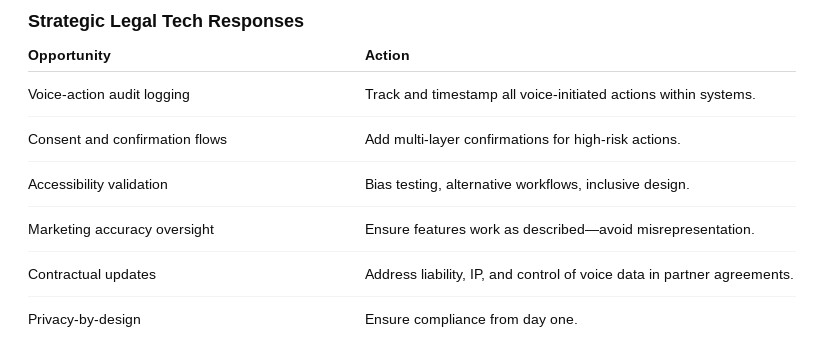
  1. Regulatory Risks Around Voice-Based Transactions Transferring funds or sharing sensitive data via voice will require robust authentication, explicit consent, and auditable logs—with compliance spanning GDPR, UK Data Protection Act, HIPAA, and jurisdiction-specific rules.
  2. Accessibility & Inclusion Voice interfaces can boost accessibility but risk exclusion if speech recognition struggles with accents, impairments, or noisy environments. Tools must meet obligations under the UK Equality Act and similar laws.
  3. Liability for Mis-Triggered Actions Misheard commands could cause financial loss or accidental disclosure. Clear confirmation steps and “undo” functions are essential.
  4. E-Discovery & Audit Readiness Verifiable, timestamped audit trails of voice actions will be vital in regulated environments—and invaluable if court proceedings require review.
  5. Updated Contracts & IP Integration with third-party apps will require revisiting agreements to clarify IP, data control, and liability in case of misuse.
  6. Privacy & Data Handling Voice brings unique privacy risks. Systems must adopt privacy-by-design to ensure lawful, transparent, and user-centric processing.

My Take

As someone interested in the intersection of international family law and legal tech, I see this as more than just a UI upgrade. It’s a paradigm shift that could:

  • Reduce barriers for vulnerable clients
  • Speed up case preparation across borders
  • Support truly inclusive digital justice …but it will also demand proactive governance to prevent abuse, discrimination, or compliance breaches.

Firms that start preparing now—by building audit trails, consent layers, and inclusive design principles—will not only protect themselves legally but also lead the way in client service innovation.


💬 What’s your view? Will voice-first tech be an accessibility breakthrough or a compliance minefield for family law? I’d love to hear how your team is preparing—and whether you think clients will trust voice for legal interactions.

#LegalTech #InternationalFamilyLaw #DigitalJustice #AccessToJustice #AI #PrivacyByDesign #Apple #VoiceFirst #LawTechInnovation